
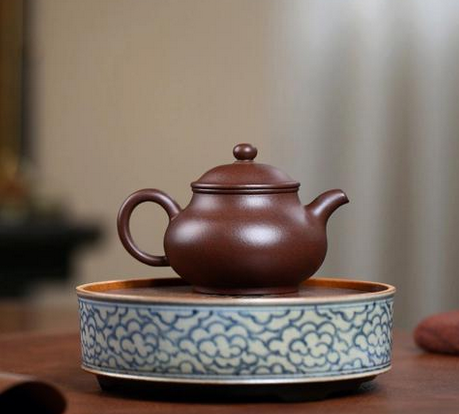

Yixing teapots, hailed as the “treasure of Chinese tea culture,” have long fascinated tea lovers and collectors worldwide. However, their pricing spans a staggering range—from less than $20 for mass-produced models to millions of dollars for masterpieces at auctions. If you’ve ever wondered, “How much is a Yixing teapot worth?” you’re not alone. The answer hinges on a complex interplay of factors, including clay quality, craftsmanship, artist reputation, and cultural value. In this comprehensive guide, we’ll demystify Yixing teapot pricing, break down the key value drivers, and help you make informed decisions whether you’re a casual tea drinker or an aspiring collector.
The Price Spectrum of Yixing Teapots: From Budget to Luxury
The first thing to understand about Yixing teapot pricing is its “spectral” diversity. You’ll find three distinct price tiers in the market, each catering to different needs and budgets. Let’s explore each tier in detail:
1. Budget Tier: Under $100 – Industrial Products for Daily Use
This tier is dominated by mass-produced Yixing-style teapots, often labeled as “original ore purple clay” but rarely meeting the standard. Most are made from non-Yixing clay (e.g., ordinary pottery clay from outer mountains) dyed with iron oxide to mimic the color of real purple clay. The production process relies on molds, rolling machines, or slip casting, allowing workers to churn out 50+ teapots per day.
While affordable, these teapots lack the unique properties of genuine Yixing clay—they’re prone to flavor contamination, hard to develop a patina, and some may even contain harmful chemicals if low-quality dyes are used. They’re suitable for beginners wanting to experience the ritual of brewing tea with a Yixing-style pot but offer no收藏 (collectible) value. Prices typically range from $20 to $80.
2. Mid-Range Tier: $100 – $3,000 – Crafted Teapots for Enthusiasts
The mid-range tier is the sweet spot for most tea enthusiasts, featuring semi-handmade or fully handmade teapots with authentic Yixing clay. Here, you’ll find works by assistant craftsmen or craftsmen with formal certifications. The clay is usually genuine Yixing ore (though often secondary-grade or blended) , and the craftsmanship is significantly more refined than budget options.
Semi-handmade teapots (mold-assisted shaping with manual finishing) dominate this range, taking 8–12 hours to make per piece. Fully handmade teapots in this tier are crafted by skilled artisans, with prices starting around $1,500. These teapots offer excellent functionality—they retain heat well, enhance tea flavor, and develop a rich patina over time. Many also have subtle artistic details, making them both practical and aesthetically pleasing. Prices vary based on clay quality, craftsmanship complexity, and the artist’s reputation.
3. High-End Tier: $3,000 – $1,000,000+ – Collectible Artworks
Once you exceed $3,000, Yixing teapots transition from practical utensils to collectible artworks. This tier includes fully handmade pieces by senior craftsmen, national-level artists, and even masterpieces by legendary artisans. The clay is often rare, such as Tianqing clay, Di Cao Qing (bottom trough green clay), or aged Huanglongshan purple clay—some of which are so scarce that only a few hundred jin are mined annually.
A single fully handmade teapot by a national-level master can take 3–5 days to complete, with meticulous attention to every detail: the spout, handle, and knob must be perfectly balanced, the lid must fit snugly (no gaps even when lifted by the knob), and the lines must exude artistic charm. Prices skyrocket based on the artist’s title (e.g., National Ceramic Art Master) , awards, and market demand. For example, a genuine teapot by Gu Jingzhou, a towering figure in the Yixing clay art world, sold for $4 million at auction. This tier is primarily for serious collectors and investors seeking appreciation potential.
Key Factors That Determine a Yixing Teapot’s Value
To answer “How much is a Yixing teapot worth?” accurately, you need to evaluate four core factors: clay, craftsmanship, artist, and condition. These factors interact to form the final price, with each playing a crucial role.
1. Clay Quality: The Foundation of Value
Clay is the soul of a Yixing teapot—genuine Yixing purple clay (zisha) from Huanglongshan, Yixing, is the gold standard. Its value depends on rarity and purity:
- Top-tier clay: Rare varieties like original ore Tianqing clay and No. 4 Di Cao Qing, with a value multiplier of 1.2–1.5. These clays are nearly extinct, making teapots crafted from them highly collectible.
- High-grade clay: Premium Huanglongshan old purple clay and Ben Shan Lu Ni (local green clay), multiplier of 1.0–1.2.
- Good-grade clay: Authentic ordinary purple clay, Duan Ni (segment clay), and Zhu Ni (red clay), multiplier of 0.8–1.0.
- Low-grade clay: Outer mountain clay or blended clay, multiplier of 0.5–0.7.
- Inferior clay: Chemical-dyed clay, multiplier ≤0.1, with no collectible value and potential health risks.
Genuine Yixing clay has a natural matte texture, uniform particle distribution, and a warm, smooth feel when touched—qualities that fake clay can’t replicate.
2. Craftsmanship: The Embodiment of Skill
Craftsmanship directly reflects the artist’s skill and is a key driver of value. Key evaluation points include:
- Shaping method: Fully handmade teapots (multiplier 1.0) are the most valuable, with visible manual beating marks inside. Semi-handmade (mold-assisted) teapots have a multiplier of 0.6–0.8, while machine-made or slip-cast teapots are 0.2–0.4.
- Detail precision: A high-quality teapot has balanced proportions, a snug-fitting lid, and clean internal finishing. The spout, handle, and knob should form a harmonious whole, exuding “vigor and spirit.”
- Shape complexity: Plain teapots (multiplier 1.0) are easier to make than ribbed teapots or square teapots (1.2) , while flower-shaped teapots (e.g., plum blossom or pine cone designs) are the most difficult (1.5) , commanding higher prices.
3. Artist Reputation: The Premium for Expertise
An artist’s background is a major factor in pricing, with职称 (professional titles) and market reputation being key benchmarks. The artist tier system (with “skilled craftsmen” as the reference) includes:
- Master-level (deceased national masters, seven old artisans): Multiplier ≥1.0 (market benchmark).
- Senior masters (active national senior craftsmen): 0.5–0.9 (adjustable by 1.1–1.3 if market popularity is high).
- Skilled craftsmen: 0.3–0.6.
- Folk artisans/assistant craftsmen: 0.1–0.3.
- Anonymous commercial potters: 0.01–0.05.
Note that a high title doesn’t always guarantee high value—”the pot should be better than the artist’s name.” A poorly crafted teapot by a high-title artist may be less valuable than a meticulously made one by a low-title artisan.
4. Condition & Decoration: The Finishing Touches
A teapot’s condition directly affects its value: brand-new teapots (multiplier 1.0) are most valuable, while those with minor usage marks (0.95–0.99) , cracks (0.7–0.9) , or major repairs (<0.5) see significant devaluation.
Decoration also plays a role—carvings by famous ceramic artists can increase value by 20–50%, while poor-quality carvings (clashing styles, rough knife work) may reduce it by 10–20%.
How to Calculate a Yixing Teapot’s Value (Practical Formula)
For those wanting a more systematic way to evaluate value, we can use a simple formula based on market benchmarks and value multipliers:
Final Value (V) = Benchmark Price (P0) × (Artist Multiplier × Craftsmanship Multiplier × Clay Multiplier) × (Shape Difficulty Multiplier × Condition Multiplier × Decoration Multiplier)
The benchmark price (P0) is the market fair price of a fully handmade, good-grade clay, classic plain teapot by a skilled craftsman (currently around $1,000).
Example: A fully handmade “Fang Gu” (ancient square) teapot by a skilled craftsman, made of premium Huanglongshan purple clay, brand-new with no decoration.
Calculation: V = 1000 × (0.4 × 1.0 × 1.1) × (1.2 × 1.0 × 1.0) = $528. This aligns with current market prices.
Tips for Buying Yixing Teapots: Avoid Overpaying or Being Scammed
When buying a Yixing teapot, keep these tips in mind to ensure you get value for your money:
- Start with mid-range options: For beginners, $100–$300 semi-handmade teapots or $1,000–$1,500 fully handmade teapots by emerging artisans are ideal. Avoid cheap “original ore” teapots under $50 and overpriced “masterpieces” without authentication.
- Check clay authenticity: Genuine Yixing clay has a gritty texture (not overly smooth) and a natural color (not overly bright). Ask for clay origin certificates if possible.
- Prioritize craftsmanship over title: A well-made teapot by an unknown artisan is better than a shoddy one by a famous artist. Inspect the lid fit, proportions, and internal finishing.
- Buy from reputable sources: Choose trusted sellers like Jianghu Teapot, which offers genuine Yixing teapots with clear clay and artist information, direct shipping from China, and quality guarantees.
Conclusion: Value Lies in Suitability, Not Just Price
So, how much is a Yixing teapot worth? It can be $20 or $4 million—ultimately, the value depends on your needs. For daily use, a budget or mid-range teapot suffices; for collection, focus on high-quality clay, exquisite craftsmanship, and reputable artists. Remember, the best Yixing teapot isn’t the most expensive one, but the one that fits your tea-drinking habits and aesthetic preferences.
If you’re looking for genuine Yixing teapots with transparent pricing and authentic quality, explore Jianghu Teapot’s collection—handmade from original ore clay, directly shipped from Yixing, China, and tailored for tea lovers worldwide.