
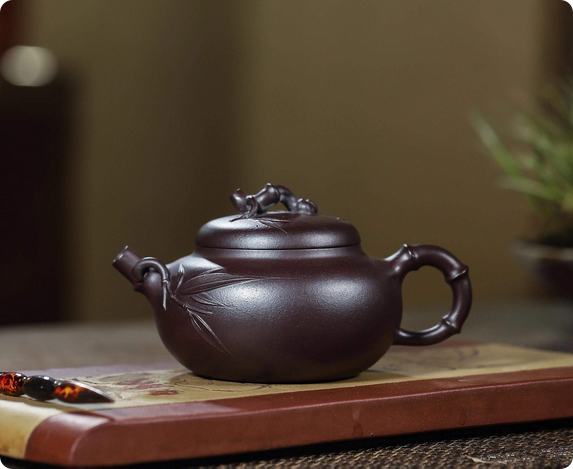

Zisha teapots are a traditional handicraft industry in Yixing, China. Pottery production has existed since the Han and Jin Dynasties, and zisha (purple clay) vessels have been continuously crafted from the Song Dynasty to the present day.
What are the benefits of using a zisha teapot to brew tea? Zisha teapots are a type of handcrafted ceramic art piece unique to the Han Chinese people, though they are now also mass-produced by machines.
The raw material is zisha clay, which originates from Yixing, Jiangsu Province.
1. Zisha clay features a dual-air-pore structure, making it a highly porous material with fine, dense pores. It excels at preserving the original flavor of tea, ensuring that the tea retains its true taste without any odors from the teapot itself. It concentrates and retains the aroma of tea, delivering a perfect balance of color, fragrance, and flavor while preserving the tea’s authentic essence.
2. Zisha teapots have excellent air permeability, preventing tea from going stale when brewed with them. Even aged tea remains fresh, and they do not develop mold even after being left for a night in summer. This makes them easy to clean and maintain, keeping the teapot hygienic. For long-term storage, simply fill the teapot with boiling water, empty it immediately, and then rinse it in cold water—its original quality and flavor will be restored, allowing you to brew tea as usual.
Unlike other ceramic teapots, zisha teapots have a porous lid that absorbs moisture, preventing water droplets from forming on the lid and dropping into the tea to accelerate fermentation. This is a key advantage over other teapots.
3. Zisha teapots absorb tea juice over time. With prolonged use, a layer of “tea residue” forms on the inner wall of the teapot. Even when empty, pouring boiling water into it will fill the teapot with a rich tea aroma. This is due to the teapot’s unique porous structure.
4. Zisha teapots have excellent thermal shock resistance. Even when filled with boiling water in the cold winter, they will not crack due to sudden temperature changes. Additionally, the sandy texture of zisha conducts heat slowly, so the teapot will not burn your hands after brewing tea. They can even be placed on a low heat source for heating without cracking.
5. With prolonged use, the surface of the zisha teapot becomes increasingly smooth and lustrous due to regular handling and cleaning. As Wen Long noted in his Tea Treatise: “Its care and fondling are no less than holding a pearl in the palm. After long use, its exterior resembles purple jade, and its interior like blue clouds.” It truly becomes a remarkable artifact.