
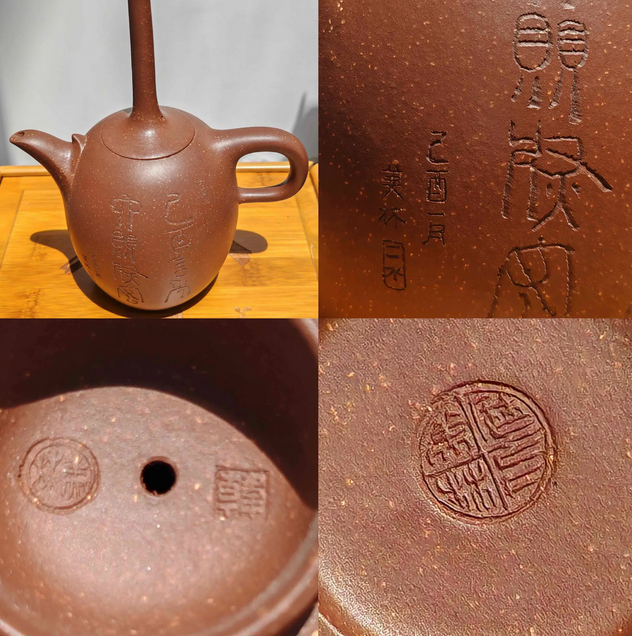

Hello fellow teapot lovers! Some of you have asked me which teapots to choose for collecting and appreciating. Today I’ve compiled the top 10 classic must-have Yixing teapots to share with you all.
In Ming Hu Tu Lu (Illustrated Record of Teapots), Ao Xuanbao compared Yixing purple clay teapots to different kinds of people: “Gentle as a man of virtue, bold as a hero, elegant as a poet, graceful as a beauty, modest as a hermit, free-spirited as a young man, petite as a dwarf, sincere as a benevolent man, ethereal as a fairy, incorruptible as a noble scholar, and transcendental as a monk.”
Yixing teapot shapes are as numerous as stars, each a feast for the eyes, and they have long been praised for the saying: “No two square pots are identical, no two round pots are the same.” Do you remember the first teapot shape you ever bought? Could it be one of these classic must-have shapes below?
Xishi Teapot
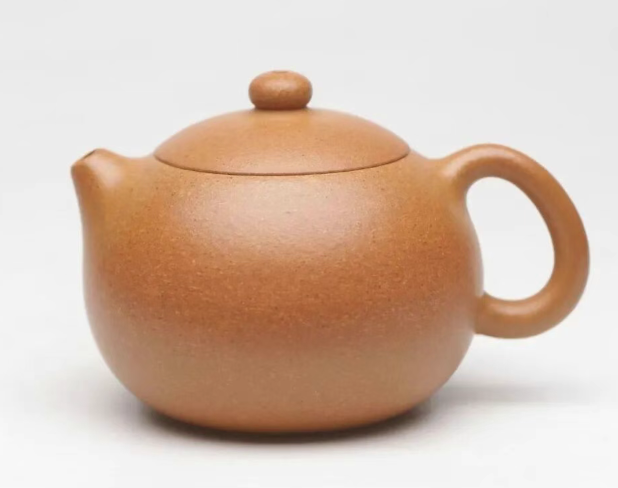
The Xishi Teapot has a short, flat round spout. Its base tapers naturally inward, with a convex and a concave curve on the body that echo each other perfectly. The entire body is round, plump and exquisitely seamless.
Beyond its elegant and delicate shape, the Xishi Teapot is also a highly practical teapot for brewing tea. It boasts the unique Yixing clay trait of “not overpowering the tea’s aroma” and excellent air permeability, making it ideal for high-aroma teas. Its wide opening makes tea loading and water pouring extremely convenient.
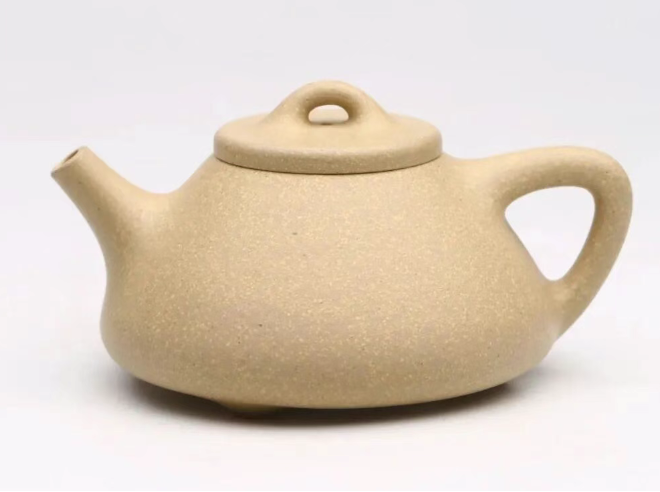
Shipiao Teapot
The Shipiao Teapot has a trapezoidal body with soft, smooth curves and a simple, unsophisticated shape. It stands on three nail-shaped feet, giving a light yet stable feel. The straight spout is concise and powerful, mostly connected seamlessly to the body for a unified look.
Its handle is usually an inverted triangle, complementing the body’s shape for a harmonious aesthetic. The flat cover with a bridge knob is neat and well-proportioned, fully embodying the beauty of exquisite craftsmanship.
First designed and made by Chen Mansheng, the Shipiao Teapot was later reimagined by literati of all dynasties, evolving into many variants such as Ziye Shipiao, Xinzhou Shipiao, Short Shipiao and Jingzhou Shipiao.
In the history of Yixing clay, the Shipiao was originally called Shiyao (stone ladle). In Cihai (Sea of Words), Yao is defined as a small cooking vessel with a handle and a spout. Su Dongpo transformed the metal yao into a stone yao—a sand pottery yao with both a spout and a handle—for boiling tea. This was the earliest Shiyao Teapot.
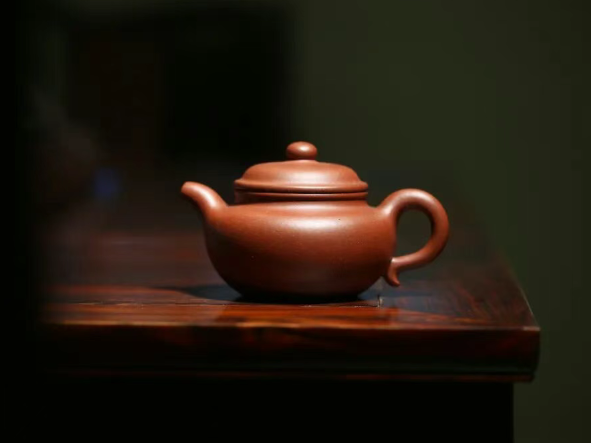
Fanggu Teapot
The Fanggu Teapot distills the essence of Yixing teapots from all dynasties. It features a flat body, bulging belly, tall neck, smooth cover, and a tight-fitting mother-son joint between the cover and the mouth. The flat round knob is sturdy, the spout and handle are well-proportioned, and its graceful shape makes it perfect for tea tasting. Cherished by the people, it has been widely passed down.
A classic plainware shape, the Fanggu Teapot is generally believed to have been created by Shao Daheng in the Qing Dynasty. Originally, it was modeled after a drum, so its name should be Fanggu (imitating drum). Back then, due to the low literacy rate of purple clay craftsmen, it was commonly written as Fanggu (imitating ancient), which later meant imitating ancient teapot shapes.
With a flat body, bulging belly, tall neck and smooth cover, its mother-son joint ensures a tight seal. The curved spout is natural and unrestrained, and the whole teapot is well-proportioned with balanced lines, flowing seamlessly as a single piece. It is one of the three most renowned classic Yixing teapot shapes.
Duo zhi Teapot
Created by Shao Daheng during the Daoguang period of the Qing Dynasty, the Duozhi Teapot is nearly a foot long and over six inches tall. With a deep, rich color as smooth as jade, it has a simple, dignified and imposing shape, fully demonstrating Shao Daheng’s exquisite teapot-making skills.
Yixing County Chronicle records a priceless Yixing teapot called Duozhi. A unique Yixing shape, it looks like a stack of spheres and hemispheres. The Chinese character Duo means to stack and connect, hence the name Duozhi Teapot.
Duo qiu Teapot
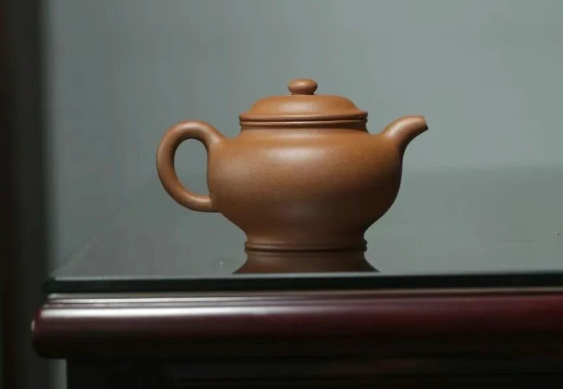
Duo means to stack, and Duo qiu means a stack of balls. Also created by Shao Daheng, the Duoqiu Teapot is a typical traditional round geometric teapot and one of the finest representatives of Yixing teapots.
Its basic shape consists of three spheres of different sizes: the knob (smallest), the cover (medium), and the body (largest). The belly is the big sphere, and the cover is the small sphere resting on top—hence the name Duoqiu Teapot.
The overall charm of Shao Daheng’s Duoqiu Teapot is cohesive: a double S-curve runs from the spout to the shoulder and the top of the handle, with perfect symmetry front and back. The upward angle of the handle’s bottom aligns in a straight line with the upward angle of the spout, forming an unbroken smooth flow from spout to handle and back.
Gongchun Teapot
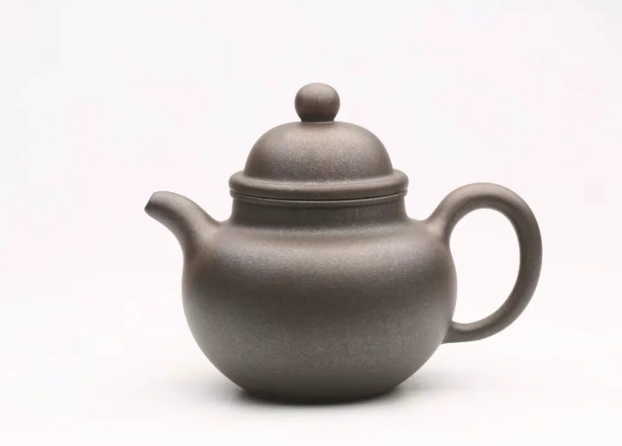
The Gongchun Teapot is famous for its simple, exquisite shape, gentle natural beauty, and pure, thin yet solid texture—a Gongchun Teapot is more precious than gold and jade.
Shaped like a ginkgo tree burl, it has a flat spherical body with a plain, uneven surface covered in ancient-looking wrinkles and swirling textures. It evokes a sense of returning to nature, with subtle natural imagery hidden in its form.
Its greatest feature is naturalness: every part, from the body to the spout and handle, follows the laws of nature. It mimics natural textures like decaying wood, ice cracks and insect-eaten wood, creating a lingering, unrestrained beauty that achieves the state of “smooth and natural, without artificiality”.
When the first Gongchun Teapots were made in the Ming Dynasty, there were no special tools. Gongchun shaped them by hand, with the help of wooden molds and tea spoons. Modern Gongchun Teapots have even thinner bodies, and polishing their natural textures is time-consuming and labor-intensive, requiring master craftsmen with exceptional skill and insight—beyond the ability of ordinary potters.
Jinglan Teapot
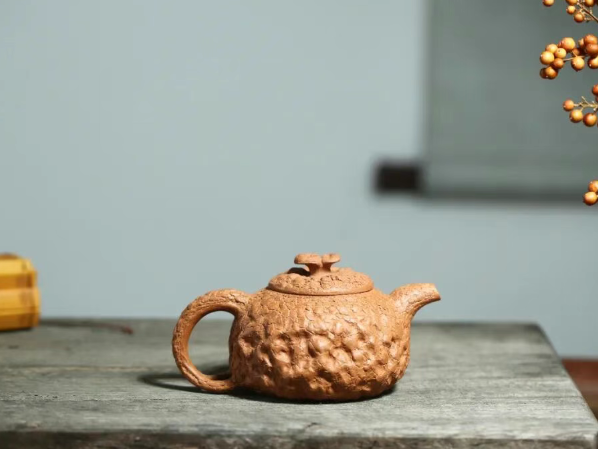
As the name suggests, it is modeled after a well rail. With a simple shape, it has a smooth inlaid cover that fits perfectly, a tall cylindrical knob unified with the body, a subtly curved spout, and a large, flat outer/round inner handle. Its round, large base makes it the earliest streamlined teapot design, with a comfortable grip for pouring. It is a classic Mansheng Teapot style.
Its simple form leaves ample room for decoration—poetry, calligraphy, painting and seal carving all add the finishing touch. For this reason, the Jinglan Teapot is highly valued by Yixing teapot collectors.
Qinquan Teapot
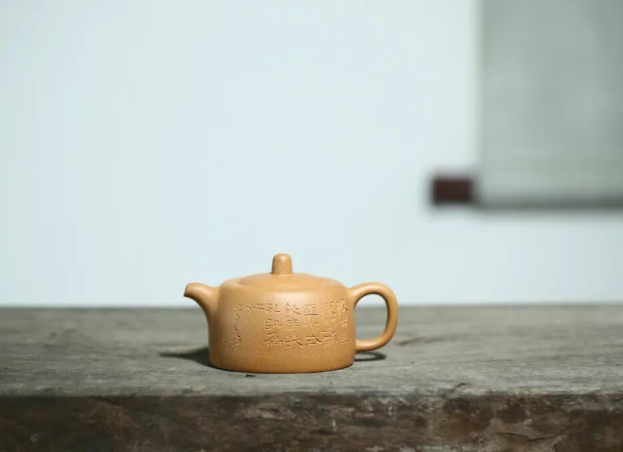
After unifying the six kingdoms, the Qin Dynasty standardized weights and measures. Quan refers to a weight used for weighing, and the Qinquan Teapot is inspired by the shape of a Qin Dynasty weight. Its creator is unknown.
Shaped like a weight, it exudes calmness and integrity. Its plain surface is simple and unsophisticated yet full of artistic conception. Gu Jingzhou, the grand master of purple clay, elevated the Qinquan Teapot to the pinnacle of plainware craftsmanship.
A classic traditional Yixing shape, it ingeniously combines the Qin Dynasty weight with the Yixing teapot. Its overall design mimics the Qin Dynasty bronze weight, with exquisite conception and a grand shape.
Pan Teapot
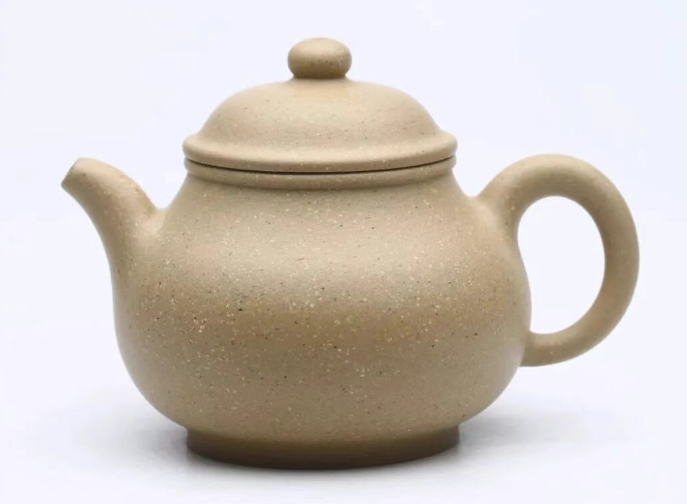
According to Yangxian Sha Hu Tu Kao (Study of Yixing Purple Clay Teapots), Pan Shicheng, courtesy name Deshe, was a native of Panyu, Guangdong during the Qing Daoguang period. An avid tea drinker, he commissioned Yixing teapots of a fixed shape, with the seal character Pan (in raised seal script) only on the cover rim (no seals on the bottom or elsewhere).
Famous for Pan Shicheng’s reputation, this shape was named the Pan Teapot. There are three variants: the Short Pan (flat persimmon-shaped belly), the Medium Pan (slightly taller, near flat spherical belly), and the Tall Pan (tall, pear-shaped belly).
Exquisitely crafted, the Pan Teapot is an excellent choice for tea tasting and appreciation. It is the perfect companion for a study—sipping tea while painting, composing poetry or calligraphy, a pleasure only true tea lovers can appreciate.
A classic Pan Teapot has a small, delicate round knob for easy gripping, a curved upward spout for smooth pouring and clean cut-off.
Dezhong Teapot
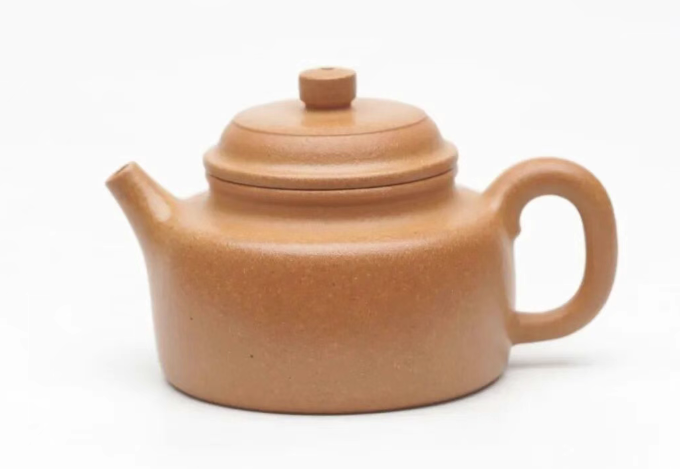
Shaped like a bell, the De (virtue) is a rhetorical embellishment, and Shao Daheng’s Dezhong Teapot is the most representative. It has a dignified, stable shape with well-proportioned dimensions and a rigorous structure, with a smooth purple clay finish. Its craftsmanship represents the peak of traditional Yixing basic skills.
It feels excellent to the touch, with a simple, unadorned shape that abandons the elaborate excesses of the Qing court teapots.
Many people start their Yixing teapot journey with classic shapes: round ones are lovely, flat ones are stable, square ones are well-proportioned. Classics are timeless choices, and a wise pick for beginners.