
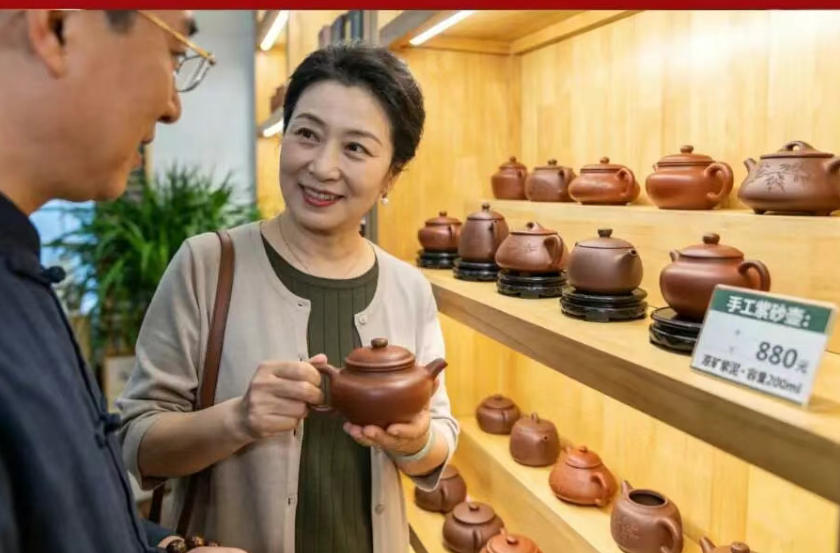

Hey everyone, choosing a purple clay teapot isn’t just about picking something that looks good—it’s full of tricks. It combines practicality for brewing tea, aesthetic appeal, and the cultural heritage of purple clay. Whether you’re using it yourself, giving it as a gift, or collecting it, finding the right method will help you select a teapot that suits your needs perfectly. Today, I’m going to break down the core points of selecting a teapot for you!
First, you need to define the purpose and scenario for buying the teapot. This is the first step—if you get the direction right, you won’t go wrong. If you’re using it for daily tea brewing, focus on practicality and brewing performance; there’s no need for flashy designs, a classic style will suffice. If you’re buying it as a gift, emphasize the teapot’s auspicious meaning, the reputation of the maker, and opt for an exquisitely packaged one that’s impressive. If you want to collect or invest, pay more attention to the artist’s potential, the uniqueness of the work, and the market trends of purple clay. Don’t buy blindly.
For personal use, choosing a classic and practical type is a safe bet. For gifting, you can pick a teapot like the “Persimmon Teapot” which symbolizes “all things going well”. For collection, starting with works from up-and-coming, promising artisans is a more prudent choice.
Next, consider the user and their age. Different people have quite different preferences and needs when it comes to teapot shapes. Young tea enthusiasts or beginners generally prefer stylish, compact, and easy-to-use teapots that feel comfortable in the hand and look visually appealing. Senior tea lovers or older friends tend to favor traditional, stable, and slightly larger teapots that enhance the flavor of the tea.
Teapot shapes are actually a form of “language”. For example, the round and cute Xi Shi Teapot is almost a favorite among young people; the strong and steady Shi Piao Teapot is particularly favored by seasoned tea lovers. Just choose according to your personal preference.
There’s another key principle—selecting a teapot based on regional tea-drinking habits. The right teapot can make the tea taste even better. Friends in Fujian and Guangdong love oolong tea, which requires a rich and strong aroma, so a small teapot with good aroma-gathering properties, like a Zhuni horizontal pot, is an excellent choice. In Yunnan and Tibet, where Pu’er tea and dark tea are commonly drunk, the mellow tea requires a larger teapot that retains heat and is breathable; a purple clay “Fan Gu” teapot is a perfect fit. In the Jiangnan region, which favors light green tea and white tea, a teapot made of section clay or mountain green clay is ideal, as it won’t overpower the tea’s natural fragrance.
A simple rule of thumb: High-aroma oolong tea pairs well with dense Zhuni clay; mellow Pu’er tea pairs well with breathable purple clay; light green and white teas pair well with light-colored section clay.
Next, let’s talk about the types and shapes of purple clay teapots. There are mainly three types: plain-body teapots, flower-shaped teapots, and ribbed teapots, each with its own characteristics.
Plain-body teapots, such as the Shi Piao and Fan Gu, have a simple and elegant design with no extra decorations. They are the most versatile and can best showcase the artisan’s craftsmanship. Flower-shaped teapots, like the Mei Zhuang and Gong Chun, are bionic in design, vivid and interesting, but their production process is more complex. Ribbed teapots, such as the Ju Ban and Ling Hua, emphasize symmetrical precision and are all about line beauty.
Here, I want to give a special reminder to beginners: it’s best to start with plain-body teapots. Their simple design makes it easy to observe the quality of the clay and experience the changes that come with maintenance, and they won’t cause审美疲劳 (aesthetic fatigue) quickly, helping you quickly build a proper understanding of purple clay teapots.
The clay is the soul of the purple clay teapot—checking the clay is the top priority when selecting a teapot. There are three common types of clay, each suitable for different teas:
Zini (purple clay) has the best air permeability and is the most common clay, suitable for Pu’er tea, black tea, and oolong tea. Zhuni (cinnabar clay) has high density and excellent aroma-gathering ability, making it perfect for brewing high-aroma oolong tea. Duanni (section clay, including mountain green clay) has a light color and a fresh texture, suitable for light teas like green tea, white tea, and raw Pu’er.
When choosing clay, there’s a strict standard to follow: never buy clay that is overly bright in color (such as bright red or blue) or has a pungent odor, as these are likely to be chemical-clay products. True purple clay has a natural and warm color, and feels delicate to the touch.
Let’s also discuss the brand and price, which everyone cares about. There’s no need to blindly pursue big brands—you can find a suitable teapot for every budget. Here are three price ranges for your reference:
200-800 yuan is the practical level, where you can buy a semi-handmade teapot with safe clay and standard shape, which is completely sufficient for daily tea brewing. 800-3000 yuan is the tasting level, where you can choose an exquisitely crafted fully handmade teapot or a work by a young and promising artisan, which offers both beauty and practicality. 3000 yuan and above is the collection level, which basically consists of works by well-known artisans, with artistic value and collection potential.
For your first teapot, it’s recommended to set your budget between 500-1500 yuan, selecting a teapot from the practical to the tasting level. This offers the highest cost performance, avoiding both the pitfalls of cheap products and the waste of money on unnecessary items.
Finally, let’s talk about the user experience and maintenance of the teapot. Actually, there’s no need for complicated rituals—just enjoy it easily. New teapots are very easy to “open”: simply wash them and pour hot water over them a few times, no need to follow those tedious steps you might see online. When brewing tea, you can try the method of “one teapot for one type of tea”. Different clay teapots can bring subtle differences to the taste of the tea, and gradually you can find the perfect match.
Maintaining a purple clay teapot is also a kind of fun. After use, wash it thoroughly, let it dry, and gently rub it with a clean tea towel. Over time, a warm “patina” will form on the surface of the teapot, making it more and more exquisite.
There are two taboos for maintenance: never use dish soap to wash the teapot, as it will damage the texture of the clay. Also, don’t rush to pour boiling water over the teapot. Taking it easy and maintaining it slowly is the correct way to care for it.
Finally, I’d like to summarize three core suggestions for you. Remember these and you’ll never be confused when choosing a teapot again:
1. For your first teapot, choose a semi-handmade, original mineral purple clay or Zhuni teapot with a classic plain-body shape (Shi Piao, Xi Shi, etc.) of 150-250 ml, with a budget of 300-1200 yuan. This will help you establish a correct understanding and a good feel for purple clay teapots.
2. When selecting a teapot, the purity of the clay is always more important than the reputation of the maker. It’s better to buy a well-made teapot from an unknown craftsman than a famous artist’s代工 (agent-made) product that contains chemical clay. Practicality is the fundamental.
3. The ultimate standard for selecting a purple clay teapot is, after all, that it is a tool for brewing tea that serves you and your tea. If you like it and it feels comfortable to use, and it can enhance the taste of the tea, then it is the perfect teapot for you.