
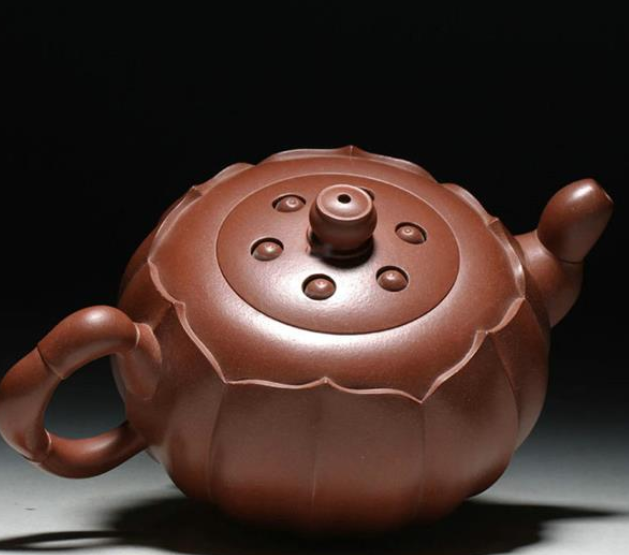

Yixing purple clay teapots, hailed as the “supreme instrument for brewing tea” by tea enthusiasts worldwide, owe their unparalleled performance not only to exquisite craftsmanship but also to the unique properties of Yixing clay itself . Sourced exclusively from Huanglong Mountain and Qinglong Mountain in Yixing, Jiangsu Province, this natural clay forms distinct types through millions of years of geological evolution. Each clay type, with its unique mineral composition, porosity, and thermal characteristics, exerts a profound influence on the teapot’s heat retention, aroma preservation, and the final flavor of the brewed tea. For tea lovers and collectors navigating the world of Yixing teapots, understanding how clay type shapes performance is the key to unlocking the perfect tea-brewing experience. In this guide, we delve into the science behind Yixing clay types and their impact on teapot performance, helping you make informed choices for your tea ritual.
Before exploring specific clay types, it’s essential to grasp the foundational feature that makes Yixing purple clay exceptional: its double-pore structure . This unique structure consists of both open pores and closed pores, a result of the clay’s mineral composition and firing process. Open pores absorb excess tea oils and impurities, while closed pores lock in heat and retain the tea’s aroma. Over time, this structure allows the teapot to “season” (known as yang hu), where repeated use builds a subtle flavor layer that enhances subsequent brews—even boiling water alone can carry the aroma of the tea previously brewed . However, the size, distribution, and density of these pores vary significantly across different clay types, directly influencing the teapot’s performance. Additionally, variations in key minerals such as iron oxide (Fe₂O₃), silica (SiO₂), and alumina (Al₂O₃) determine the clay’s color, texture, shrinkage rate during firing, and ultimately its compatibility with different tea varieties .
The three primary Yixing clay types—Zi Ni (Purple Clay), Zhu Ni (Cinnabar Clay), and Duan Ni (Mixed Clay)—each possess distinct characteristics that shape their performance. Let’s explore each type in detail, from their geological origins to their practical impact on tea brewing.
Zi Ni (Purple Clay) is the most common and versatile of the three, accounting for over 60% of Yixing clay reserves . Mined from deep ore layers (below the Jia Ni layer) of Huanglong Mountain, its parent ore is “Qing Ni” (blue clay), which turns purple-brown, deep purple, or liver-colored after firing due to its moderate iron oxide content (8%-12%) . This clay type is celebrated for its balanced performance, thanks to a well-proportioned double-pore structure and medium porosity (28%-32%) . Its quartz particles (0.01-0.1mm) form a stable “skeleton,” while clay minerals sinter to create uniform pore channels, giving Zi Ni teapots an ideal balance of breathability and heat retention . This balance makes Zi Ni an excellent all-rounder, capable of softening the astringency of fermented teas while enhancing their richness .
In terms of practical performance, Zi Ni’s medium heat retention (thermal conductivity 0.8-1.2W/m·K) maintains a stable brewing temperature, critical for extracting complex compounds from tightly rolled oolongs or aged Pu’er . Its moderate adsorption capacity (specific surface area 5-8m²/g) effectively reduces the astringency of tea polyphenols by approximately 15-20% and converts storage odors in aged teas with an efficiency of 70% . Experimental data shows that when brewing Pu’er tea in a Zi Ni teapot, the precipitation of tea polyphenols decreases by 12%, soluble sugars increase by 18%, and amino acid loss is only 5%—resulting in a smoother, more mellow茶汤 (tea liquor) . Zi Ni’s plasticity is also superior (plasticity index 15-20), making it suitable for crafting large teapots and complex shapes (such as round vessels) using the “da shen tong” (beating the body) technique . For beginners or tea lovers who enjoy a variety of teas, Zi Ni teapots are a reliable choice due to their durability and adaptability to most tea types, including ripe Pu’er, dark tea, and roasted oolongs .
Zhu Ni (Cinnabar Clay) is a rare and premium clay type, often referred to as the “noble of clays” . Mined from shallow soil layers (50-100 meters above sea level) as lumpy or nodular ore, its parent ore includes “Zhaozhuang Zhu Ni” and “Xiao Meiyao Zhu Ni” . With the highest iron oxide content (12%-18%) among the three clay types, Zhu Ni fires to a vibrant cinnabar red, orange-red, or purple-red color, with a smooth, porcelain-like texture due to high vitrification . Its key performance characteristic is low porosity (18%-22%) and low water absorption (<2%), with tiny pores (diameter <5μm) that excel at trapping aroma . This makes Zhu Ni a “fragrance catcher,” ideal for highlighting the delicate floral and fruity notes of high-aroma teas .
Zhu Ni’s performance is defined by its excellent aroma retention and fast heat dissipation . Its dense structure locks in aromatic compounds, increasing aroma preservation by 30-40% and extending the duration of sweet aftertaste by 50% . When brewing Phoenix Dan Cong or Tieguanyin (high-aroma oolongs), Zhu Ni teapots retain 92% of aromatic substances and increase the concentration of theaflavins by 15%, while reducing caffeine precipitation by 8%—resulting in a fragrant, sweet, and less bitter cup . However, Zhu Ni’s high montmorillonite content (30%) leads to a high shrinkage rate (18%-25%), making it prone to cracking during firing (a phenomenon known as “ten Zhu nine cracks”) . To mitigate this, artisans add 10%-20% “cooked sand” (sintered clay particles) and age the clay for over two years before shaping, often using the “xiang shen tong” (inlaying the body) technique . Zhu Ni teapots are typically small (below 150cc) due to their fast heat conduction, which prevents scalding and maintains optimal brewing temperature for delicate teas . They are best suited for high-aroma teas like oolongs, black teas (Lapsang Souchong, Jin Jun Mei), and light-roasted rock teas, but should be avoided for ripe Pu’er, as they may trap earthy odors .
Duan Ni (Mixed Clay), also known as Tuan Ni, is a symbiotic ore of Zi Ni and Lü Ni (Green Clay), primarily mined from interlayers of Huanglong Mountain and Qinglong Mountain ore veins . Unlike Zi Ni and Zhu Ni, Duan Ni is not a single mineral but a natural blend, resulting in a diverse range of colors (beige, golden yellow, grayish green) and textures . Its key performance advantage is high porosity (32%-36%), the highest among the three clay types, due to its high sand content (30%-40%) and fibrous structure from minerals like chlorite . This makes Duan Ni the “king of breathability,” with excellent heat dissipation that prevents delicate teas from being over-steeped .
Duan Ni’s high breathability and low iron oxide content (3%-6%) make it ideal for preserving the fresh, clean flavor of light teas . Its neutral properties do not overpower the tea’s natural taste, retaining 95% of chlorophyll and reducing vitamin C loss by only 12% when brewing green teas like Longjing . This makes it perfect for green tea, white tea, and lightly fermented oolongs, as it maintains the tea’s freshness and highlights its delicate fragrance . Duan Ni’s high silica content (>65%) gives it a wide firing temperature range (1180-1240℃), and high-temperature firing causes magnesium oxide (MgO) in Lü Ni to precipitate, creating a “golden sand shimmer” effect . Its moderate adsorption capacity (less prone to flavor crossover) also makes it suitable for aging ten-year-plus ripe Pu’er, as it purifies storage odors while preventing the茶汤 from becoming overly strong . However, Duan Ni’s high sand content results in slower development of mellow thickness in the茶汤, making it less ideal for heavily fermented teas .
Beyond the three primary clay types, special Yixing clays like Jiang Po Ni (Slope Clay) and Tian Qing Ni (Sky Blue Clay) offer unique performance characteristics . Jiang Po Ni, with its enhanced double-pore structure, increases the mellow thickness of the茶汤 by 35%, making it ideal for aging old teas . Tian Qing Ni, rich in rare trace elements, boosts the intensity of sweet aftertaste by 40% and enhances throat rhythm . However, these special clays are extremely rare and often more expensive, making them collector’s items rather than daily-use teapots.
To maximize the performance of your Yixing purple clay teapot, it’s crucial to match the clay type to your preferred tea variety—a principle known as “one teapot, one tea” . Here’s a practical guide to pairing clay types with teas: For fermented teas (ripe Pu’er, dark tea) and roasted oolongs, choose Zi Ni for its balanced heat retention and astringency reduction. For high-aroma teas (Phoenix Dan Cong, Tieguanyin, black tea), Zhu Ni’s aroma-locking ability will elevate the tea’s fragrant notes. For fresh, light teas (green tea, white tea, young raw Pu’er), Duan Ni’s high breathability and flavor-neutral properties are the best choice . Additionally, avoid common misconceptions: not all teas suit Yixing teapots (yellow tea is better brewed in porcelain), price does not equal performance (basic clay types are often more practical), and using one teapot for multiple teas leads to flavor crossover (45%-60% chance) .
In conclusion, the performance of Yixing purple clay teapots is deeply rooted in their clay type. From the versatile balance of Zi Ni to the aroma-enhancing precision of Zhu Ni and the freshness-preserving breathability of Duan Ni, each clay type offers a unique tea-brewing experience. Understanding the geological origins, mineral composition, and performance characteristics of these clays allows you to select a teapot that not only complements your favorite teas but also deepens your appreciation for the time-honored art of Yixing teapot craftsmanship. Whether you’re a seasoned tea enthusiast or a beginner, investing in a teapot tailored to your tea preferences will transform your daily tea ritual into a journey of flavor and tradition.
At KJH Tea (www.kuaijianghu.com), we curate a selection of authentic Yixing purple clay teapots, each crafted from premium Zi Ni, Zhu Ni, and Duan Ni sourced directly from skilled artisans in Yixing. Explore our collection to find the perfect clay type for your tea journey, and elevate every cup with the unique performance of Yixing’s legendary clay.