
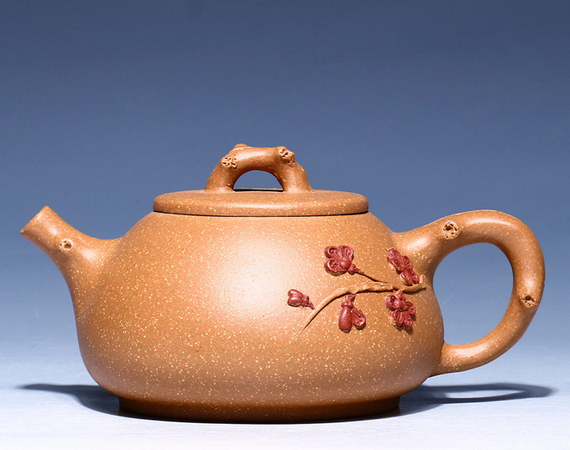

For tea enthusiasts and collectors worldwide, Yixing purple clay teapots are more than just brewing tools—they are symbols of Chinese craftsmanship and cultural heritage. Yet, anyone exploring the market will quickly notice a striking reality: Yixing teapots range from hundreds to millions of dollars, with masterpieces fetching record-breaking prices at auctions. For example, a set of 38 Yixing teapots crafted by the “grandmaster of teapot art” Gu Jingzhou was sold for 212.8 million yuan (approximately 30 million US dollars) at an auction in 2015, stunning the collection world. This naturally raises the question: Why are Yixing teapots so expensive? The answer lies in a unique combination of scarce raw materials, intricate traditional craftsmanship, the influence of master artisans, profound cultural connotations, and strict market regulations. In this comprehensive guide, we will delve into each of these factors, unraveling the reasons behind the high value of Yixing teapots and helping you understand why they are regarded as “moving works of art” worthy of investment and collection.
The foundation of Yixing teapots’ value lies in their exclusive and scarce raw material—Yixing purple clay, which is only found in the Huanglong Mountain and Qinglong Mountain areas of Yixing, Jiangsu Province. This clay is a non-renewable resource formed by millions of years of geological evolution, with a unique mineral composition that cannot be replicated elsewhere. What makes this clay even more precious is its limited reserves and increasingly strict mining restrictions. According to geological surveys, high-quality purple clay reserves are rapidly dwindling, and surface deposits of high-grade clay have almost been exhausted. To protect this valuable resource, the Chinese government has implemented strict regulatory measures: mining rights have been taken over by the provincial government, and annual mining quotas are set, reducing the output of high-quality purple clay by 30% in recent years. Additionally, open-pit mining is strictly prohibited, and only legal, licensed underground mining is allowed, which significantly increases mining costs. The price of raw Yixing purple clay has soared a hundredfold over the past few decades—from tens of yuan per ton to over 7,000 yuan per ton, making it “more valuable than gold” in the eyes of craftsmen. Among the various types of Yixing clay, Zhu Ni (Cinnabar Clay) is particularly rare, accounting for less than 5% of total reserves, which is one of the reasons why Zhu Ni teapots are often priced significantly higher than other types.
Beyond the scarcity of raw materials, the intricate and time-consuming traditional craftsmanship is another major driver of Yixing teapots’ high cost. Crafting a genuine hand-made Yixing teapot is a labor-intensive process that requires mastery of multiple complex techniques, and even skilled artisans can only produce a limited number of pieces each year. The production process involves over 100 steps, from clay selection and refining to shaping, trimming, decorating, and firing, each requiring extreme precision. First, the raw clay must be refined: it is crushed, sieved, mixed with water, and then aged for 6 months to several years. This aging process softens the clay, improves its plasticity, and removes air bubbles, ensuring the teapot does not crack during firing. Next comes the shaping stage, the most demanding part of the process. Traditional full-hand shaping (known as “quan shou gong”) relies on simple tools like wooden bats and bamboo strips, with no use of molds or machinery. Craftsmen use the “slapping technique” to form the teapot body, requiring years of practice to master the balance of force and symmetry. For example, the spout, handle, and lid of a high-quality Yixing teapot must be perfectly aligned—when the lid is placed on the teapot, it should fit tightly without gaps, and the teapot should stand stably even when lifted by the handle alone. Firing is another critical step: Yixing teapots are fired at a high temperature of 1180-1240℃, and the temperature must be precisely controlled. A slight deviation can cause the teapot to crack, deform, or change color, ruining hours of painstaking work. It is not uncommon for craftsmen to destroy unsatisfactory pieces, further reducing the yield and increasing costs. Unlike mass-produced machine-made teapots, full-hand Yixing teapots are unique works of art, with subtle differences in texture and shape that add to their value.
The reputation and craftsmanship of the artisan behind the teapot play a decisive role in its price. In the Yixing teapot industry, the status of the craftsman directly correlates with the value of the work, and pieces by national-level or provincial-level master artisans are particularly sought after. Becoming a master artisan requires decades of dedication: many start learning the craft in their teens, apprentice with renowned masters for years, and win numerous national awards to gain recognition. For example, Gu Jingzhou, hailed as the “grandmaster of teapot art,” spent nearly 80 years refining his craftsmanship, and his works are known for their elegant shapes, smooth lines, and profound artistic connotations. Due to his high reputation and the limited number of works (he often spent years creating a single batch and destroyed unsatisfactory pieces), his teapots have become the most valuable in the auction market. Today, works by active national-level masters can easily sell for hundreds of thousands of dollars, while pieces by promising young craftsmen (under 40 years old) are also gaining value as they represent the future of the craft. However, it is important to note that the market also has risks of overhyping “master apprentices”—some merchants exaggerate the connection between ordinary craftsmen and famous masters to inflate prices. The implementation of the 2025 “Regulations on Promoting the High-Quality Development of the Yixing Purple Clay Industry” has standardized this by requiring all artisans’ qualifications to be verifiable, helping to purify the market and protect collectors’ interests.
The profound cultural connotations and historical heritage of Yixing teapots further elevate their value. Yixing teapot craftsmanship has a history of over a thousand years, dating back to the Song and Yuan dynasties and flourishing in the Ming Dynasty. It was inscribed on the list of national intangible cultural heritage in 2006, making it one of the few traditional crafts protected by national legislation. Yixing teapots are closely intertwined with Chinese tea culture—their unique double-pore structure can absorb tea oils and retain aroma, enhancing the flavor of tea over time. This “living” characteristic, where the teapot evolves with each brew, makes it a bridge between the user and tea culture. Additionally, many Yixing teapots incorporate elements of traditional Chinese art, such as calligraphy, painting, and seal carving, integrating practicality with aesthetics. In recent years, cross-border collaborations between Yixing teapots and cultural IPs (such as the Palace Museum’s cultural and creative series) have further enriched their cultural value, attracting a new generation of collectors. For many collectors, owning a Yixing teapot is not just about owning a brewing tool, but about inheriting a piece of Chinese cultural heritage—a sentiment that significantly contributes to their willingness to pay premium prices.
Strict market regulations and the growing trend of rational collection have also consolidated the high value of genuine Yixing teapots. In the past, the market was plagued by counterfeits, such as “foreign mountain clay” (clay from non-Yixing areas) passed off as genuine Huanglong Mountain clay, and machine-made teapots pretending to be full-hand works. These counterfeits disrupted the market and damaged the reputation of Yixing teapots. However, the implementation of the new “Yixing Purple Clay Industry Regulations” and the updated “Purple Clay Pottery” national standard in 2025 has brought sweeping changes. The new regulations mandate a full mud material traceability system—each genuine Yixing teapot can be traced to its mine, mining time, and refining process via a QR code. Additionally, all teapots must be clearly labeled as “full-hand,” “semi-hand,” or “reproduced,” excluding machine-made and slip-cast teapots from the category of “purple clay pottery.” These measures have effectively curbed counterfeiting, increased the cost of producing fake teapots, and made genuine works more valuable. At the same time, the collection market is shifting from speculative hype to value investment—collectors are increasingly focusing on the quality of mud materials, craftsmanship, and cultural connotations rather than blindly chasing famous names. This rational shift has further stabilized the high value of high-quality Yixing teapots.
To help you better understand the value of Yixing teapots, here are answers to common questions about their pricing: Q1: Are all Yixing teapots expensive? No. The price varies greatly depending on factors such as mud material, craftsmanship, and the artisan’s status. Entry-level full-hand teapots made by emerging craftsmen may cost a few hundred dollars, while masterpieces by national-level artisans or vintage pieces can cost millions. Machine-made or low-quality mud teapots are cheaper but lack the value of genuine hand-made ones. Q2: Why is Zhu Ni teapot more expensive than Zi Ni? Zhu Ni is extremely scarce (accounting for less than 5% of reserves) and has a high shrinkage rate (18%-25%) during firing, making it prone to cracking—”nine out of ten Zhu Ni teapots crack during firing.” The high production difficulty and low yield significantly increase its cost. Q3: Do Yixing teapots appreciate in value? Yes. High-quality Yixing teapots, especially those made by renowned artisans, have an annual appreciation rate of about 30%. For example, Gu Jingzhou’s works have seen their prices soar by tens of times over the past decade. However, only genuine, high-quality pieces have appreciation potential—counterfeits or low-quality works will not increase in value. Q4: How to avoid overpaying for a Yixing teapot? Focus on three core factors: verify the authenticity of the mud material via the traceability system, check the artisan’s qualifications, and inspect the craftsmanship (such as the fit of the lid, the smoothness of the spout, and the symmetry of the shape). Avoid being misled by exaggerated marketing terms like “master’s closed disciple.”
In conclusion, the high price of Yixing teapots is not arbitrary but the result of a combination of scarce raw materials, intricate traditional craftsmanship, the influence of master artisans, profound cultural value, and strict market regulations. Each genuine Yixing teapot is a crystallization of time, craftsmanship, and culture—from the rare purple clay mined under strict quotas to the hundreds of hours of handcrafting by skilled artisans, every detail contributes to its value. For tea lovers, investing in a Yixing teapot is not just a purchase but an investment in a piece of living culture that will evolve and appreciate over time. For collectors, Yixing teapots represent a unique combination of artistic value and investment potential. Whether you are a beginner looking for an entry-level piece or a seasoned collector pursuing masterworks, understanding the factors behind their high value will help you make informed decisions and truly appreciate the charm of Yixing purple clay craftsmanship.