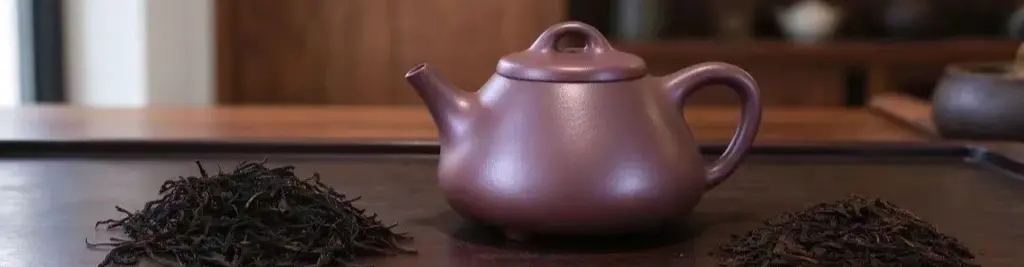
Many people looking for a Zisha teapot face their first big question: should they choose a fully handmade Zisha teapot or a semi-handmade one?
Marketing from sellers can easily mislead buyers into thinking semi-handmade teapots are fake or low-quality, while fully handmade ones are always expensive and superior.
The truth is different. Both are handmade teapots, only made with different forming methods. We will explain this clearly for new collectors today.
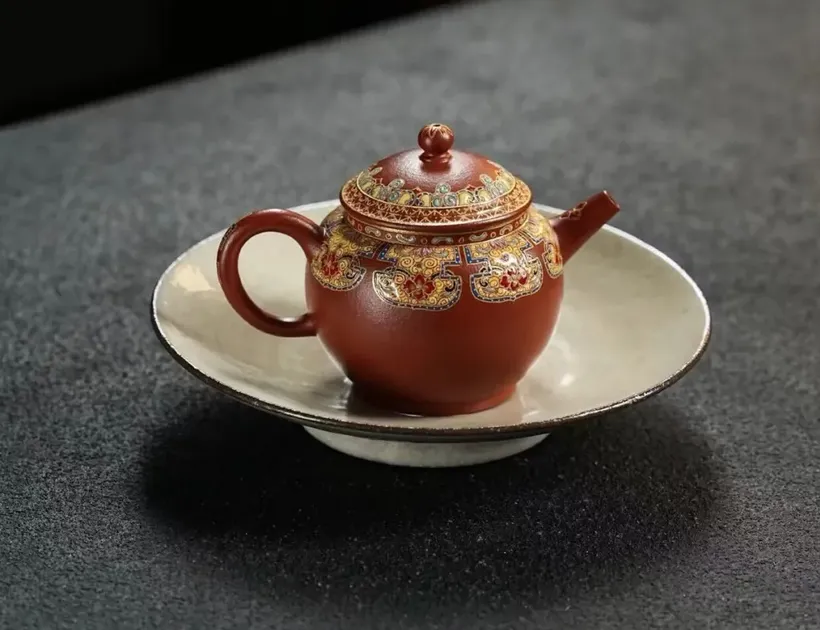
Quick core distinction
Fully handmade: Shaped entirely by clay beating, no plaster mould used.
Semi-handmade: A plaster mould helps set the body shape; the spout and handle are still attached and refined by hand.
Important note: Semi-handmade does NOT equal machine-pressed or slip-cast teapots. Do not mix these up!
Comparison of production processes
Fully handmade Zisha teapot
1. Cut clay slabs, roll them into a tube, then repeatedly beat the body with wooden paddles to form its curve, with no mould shaping.
2. Spout, handle and knob are all joined and trimmed carefully by hand.
3. Production takes a long time, usually 3 to 5 days for one teapot.
4. Every piece carries subtle unique characteristics, highly dependent on the maker’s skill.
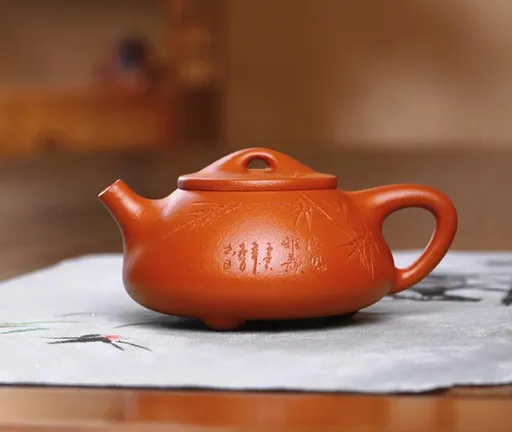
Semi-handmade Zisha teapot
1. A clay tube is formed first, placed inside a two-part plaster mould, and pressed outward to lock the shape.
2. After demoulding, the maker manually attaches the spout and handle, then sands and polishes the piece.
3. Higher efficiency; a maker can finish 1–2 pieces per day.
4. The mould helps standardise the outline, so finished pieces share consistent form.
5 simple visual checks you can do in person
1. Mould line
Semi-handmade: Faint mould lines often remain on both sides where the spout and handle connect to the body. They may still show under strong light even after polishing.
Fully handmade: No symmetrical mould lines. Only a joining line from the clay slab may be visible inside the handle.
2. Inner rim filling clay
Semi-handmade: Extra clay is added around the inner rim to prevent collapse during moulding, forming a smooth sloped thick band.
Fully handmade: Only thin bonding clay is used, creating a stepped edge without that thick slope.
3. Inner clay gate
Fully handmade: Uneven pressure from beating creates a naturally uneven interior, loose clay gate with vertical folds.
Semi-handmade: Mould pressure leaves a smooth, tight interior with mostly fine horizontal lines.
4. Inner maker’s stamp
Fully handmade: The stamp is pressed into the clay slab before beating, so it stretches and distorts gently along the curve of the teapot.
Semi-handmade: Stamping happens after the body is shaped; the stamp stays neat and rigid with little distortion.
Caution: Inner stamps can be faked. Never judge a teapot solely by the stamp. Check multiple features together.
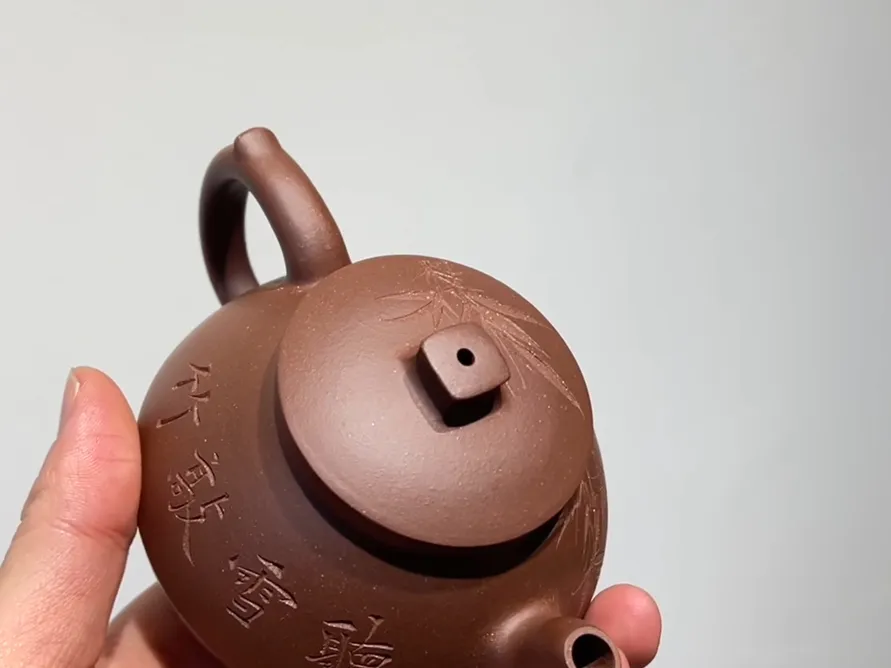
5. Base wall trimming
Semi-handmade: Strong mould pressure often leads to a tall trimmed wall that runs partway up the body.
Fully handmade: The trimmed wall stays low, limited only around the bottom circle.
Which one suits you for brewing, daily use or collection?
1. Brewing performance
With the same clay material, the difference in tea flavour is minimal. Fully handmade teapots have looser clay gates, slightly better air permeability and develop patina faster. Semi-handmade bodies are denser, pour steadily and work for everyday tea making.
2. Price difference
Semi-handmade: Lower labour input brings a lower price point, which makes it accessible for regular use.
Fully handmade: It requires more working hours, so it usually carries a higher price, driven by the hand-forming craft and individual character of each piece.
3. Buying recommendations
For daily tea drinking and stable form: A well-made semi-handmade teapot meets basic practical needs.
If you enjoy patina building, appreciate subtle artistic character, or plan to collect: Go for fully handmade; each piece has its own charm and holds value better.
Essential buying reminders
1. Do not idealise fully handmade work. A poorly made fully handmade teapot can be worse than a finely crafted semi-handmade one.
2. Semi-handmade is not inherently inferior. Still, its core shaping relies on mould assistance, which separates it from fully hand-beaten ware.