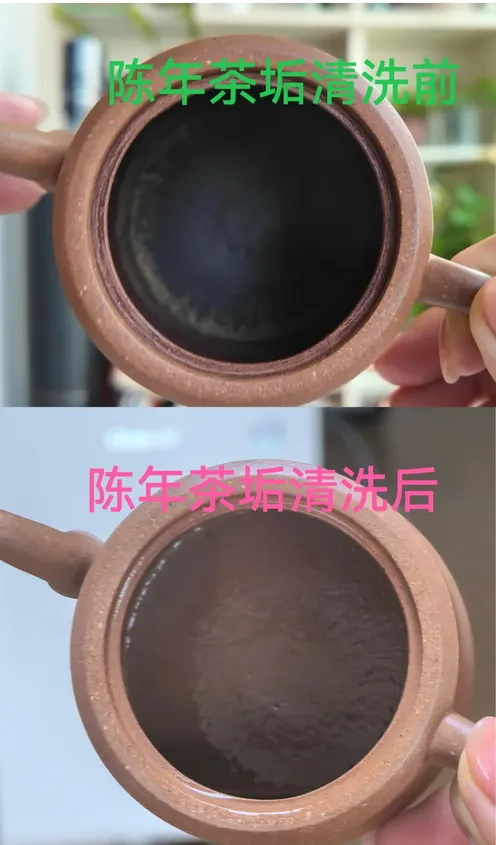
Tea rust is the dark, sticky residue that slowly accumulates on the inner wall, spout and lid seam of a Chinese Purple Clay Teapot. Many new tea lovers confuse heavy tea rust with beautiful patina, but these two are not the same thing. Natural patina forms evenly from thin tea layers over time, while tea rust is stale, oxidized tea sludge that builds up when you skip basic cleaning steps. If left untreated, it will turn thick, black and hard to remove, and it can add stale, sour flavors to every brew.
The most effective way to avoid tea rust starts right after you finish brewing. Never leave used tea leaves or leftover tea liquid sitting inside the teapot for hours or overnight. Warm tea liquid contains tannins and organic matter. When it cools and dries slowly inside the porous clay, these substances stick firmly to the surface and start to oxidize quickly. This is the main cause of thick tea rust. Empty the leaves immediately once you finish your session, before the tea cools fully.
Your rinsing routine also makes a big difference. After dumping out the leaves, rinse the whole pot with warm clean water. Gently wipe the inner wall, the corner where the bottom meets the side, and the inside of the spout with a soft tea cloth. The spout and lid gap are easy spots where tiny tea particles get trapped unnoticed. A quick rinse is not enough if you skip wiping hidden corners; tiny leftover particles will slowly build up into tea rust. Do not use dish soap, scouring pads or abrasive cleaners, as these will damage the clay and ruin its flavor memory.
Complete drying is another key step people often overlook. After rinsing, place the teapot with its lid ajar in a cool, shaded spot. Air must circulate freely inside the pot. If you close the lid tightly while the interior is still damp, moisture cannot escape. The damp, dark environment speeds up oxidation and mold growth, which quickly develops into tea rust. Keep it away from closed cupboards until it is fully dry, especially if you live in a humid region.
Even with careful care, faint thin stains may appear after long-term use. This is normal and different from thick tea rust. If you already have light tea rust, soak the pot in warm plain water for a short time and wipe it softly. Prevention is always easier than cleaning hardened tea rust. Build this simple routine into every tea session, and your Chinese Purple Clay Teapot will develop a clean, glossy natural patina instead of ugly stale tea sludge.