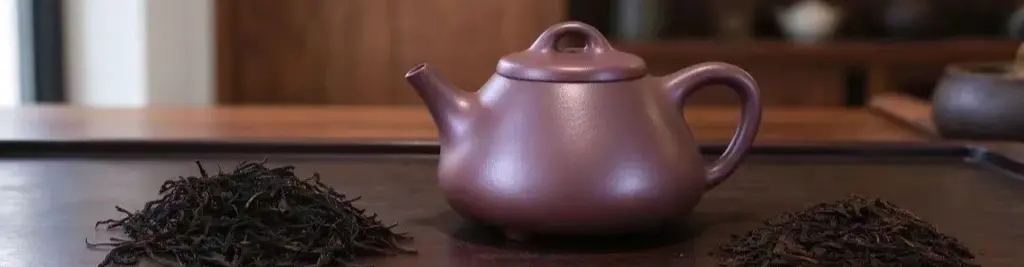
When you first use a Yixing Purple Clay Teapot, you may see the tea liquid fade quickly on the surface, or the inner wall takes in tea water in just a few seconds. This can surprise new tea drinkers, and many start to wonder whether the pot is good or defective. Fast tea absorption is tied closely to the porosity of zisha clay, but it does not always mean the teapot is high quality. You need to tell normal absorption apart from abnormal water seepage.
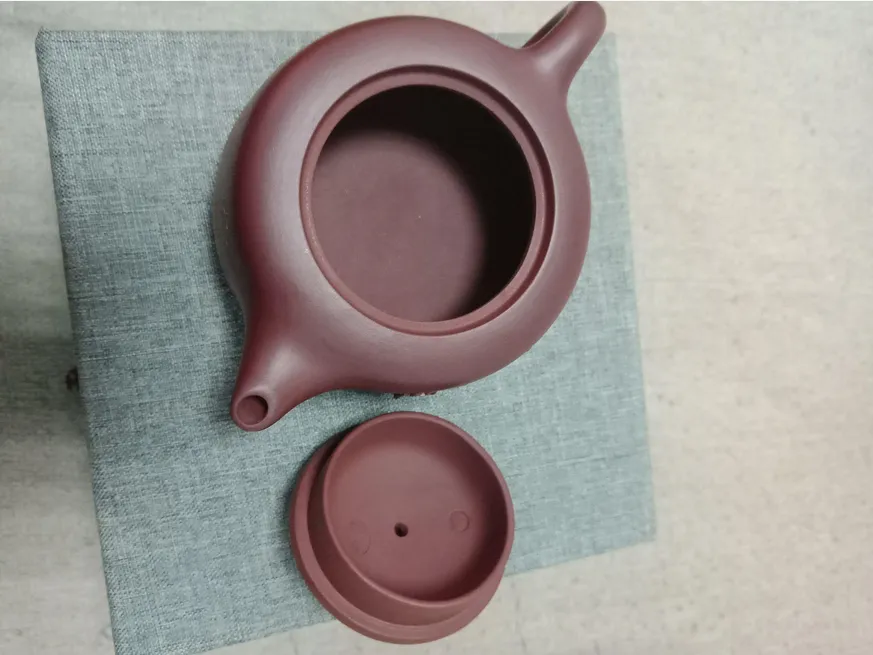
Well-made natural purple clay has countless tiny interconnected pores. These micro pores are the signature feature of genuine zisha material, allowing slow air exchange and gradual tea absorption during brewing. A brand-new, well-fired teapot will absorb tea faster at the beginning because the pores are clean and empty. As you keep using it, tea substances slowly fill the pores and form a thin layer of tea film. After several weeks of regular use, the absorption speed will slow down naturally, and the pot starts to develop a soft patina.
Still, there is a clear line between proper absorption and leaking. Normal absorption only makes the surface damp, and no water will drip out from the pot body or bottom. If you can see water seep through the wall and leave wet marks on the tea tray, this is not absorption, it is a firing defect or uneven clay structure. Underfired clay or poorly compacted clay during hand shaping often creates large disconnected voids, which let tea run through the walls. This kind of teapot cannot be fixed with seasoning, and it will keep leaking every time you brew tea.
Clay type also changes how fast the pot absorbs tea. Looser, more open clay absorbs tea much faster than dense clay. Some clay with fine mineral particles has smaller pores, so the absorption process is gentler. Thin-walled pots also show faster absorption than thick-walled ones, simply because the clay layer is thinner. This is why two Yixing Purple Clay Teapots can behave differently even if they are made from the same batch of ore.
A simple test you can do at home: fill the pot with hot water, close the lid and leave it on a dry tray for ten minutes. If only the surface looks slightly damp without dripping, the fast absorption is normal and desirable. If water gathers underneath the pot, you are looking at a flawed piece. Take time to season your teapot slowly, and you will watch its absorption rate stabilize as the natural patina builds up over time.