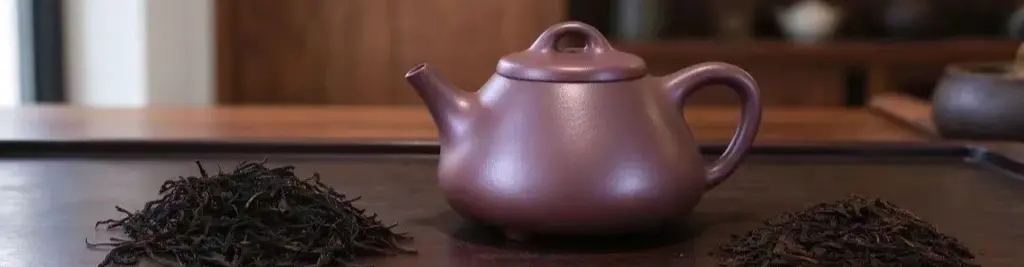
It is common for new tea users to get surprised when their Yixing Purple Clay Teapot slowly turns deeper and richer in color after repeated use. This change is not a stain, at least not in the bad sense. It is the natural formation of patina, which many Zisha collectors look forward to.
Zisha clay has countless fine open pores. Every time you brew tea, tiny tea oils, tannins and soluble pigments seep into these pores. As the pot cools down, these substances settle inside the clay and stay there. With consistent, proper use, the surface gradually develops a smooth, glossy layer. This layer makes the teapot look darker and more textured.
Not all darkening is good, though. If the pot gets dark only in wet spots or leaves uneven, sticky marks that smell musty, it is not healthy patina. That usually happens when you trap leftover tea water inside and never fully dry the teapot between uses. Mold and old tea sludge build up on the surface instead of forming clean patina.
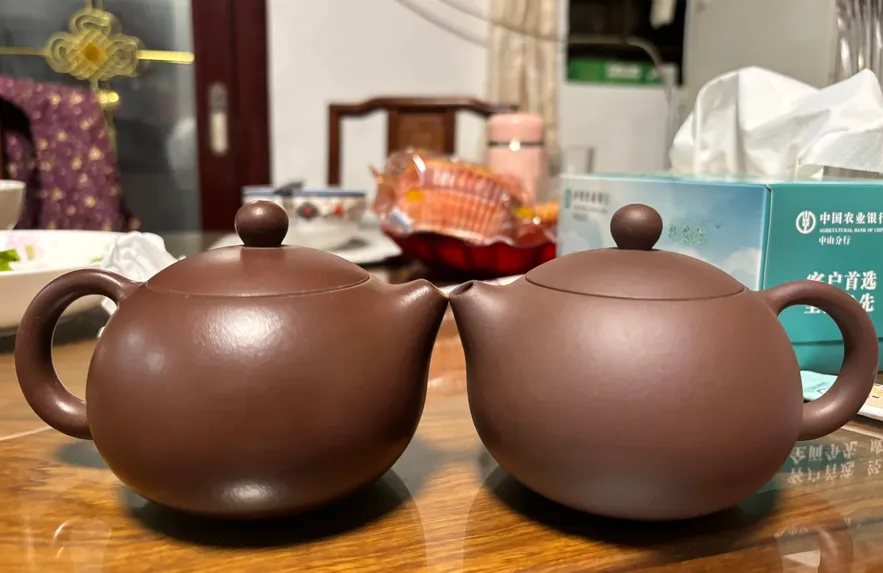
The speed of color change depends on clay type and how often you brew. More porous clays develop patina faster. The key rule is simple: rinse the pot right after brewing, empty all tea leaves, and let it air dry completely. This way, your teapot darkens evenly and builds a beautiful, natural patina over months and years.