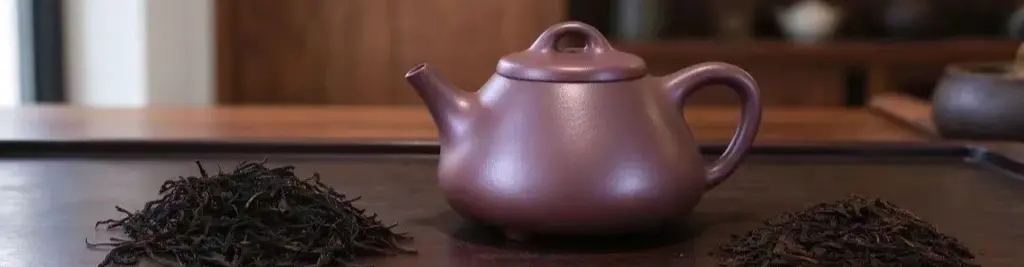
If you browse handmade Yixing teapots, you will quickly notice that some pots feel thick and heavy, while others are thin and light. This difference is not just a random choice by the potter. Wall thickness is carefully decided during the hand-building process, shaped by clay characteristics, the teapot’s design and the type of tea it is made for. Understanding this will help you pick a pot that matches your brewing habits.
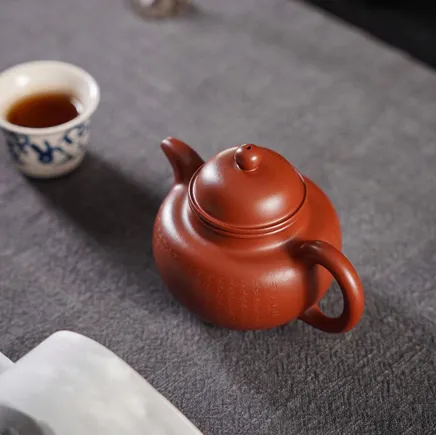
Clay property is the first key factor. Some clay types shrink more during firing. Zini clay, for example, shrinks heavily when heated, so potters often leave slightly thicker walls to prevent cracking or deformation in the kiln. Clays that are more stable during firing can be shaped into thinner walls safely. An experienced maker knows exactly how much each clay will shrink, and adjusts the thickness while throwing or beating the clay by hand.
Brewing function is another major reason. Thicker walls hold heat longer and keep the temperature stable for a longer time. This works perfectly for oolong tea and ripe pu-erh, which benefit from sustained high heat to bring out rich and layered flavors. Thin-walled handmade teapots lose heat faster. They suit delicate teas that turn bitter easily with too much heat, such as light roasted oolong and some raw pu-erh. A thin wall also lets you feel the subtle temperature changes when you hold the pot.
Skill and design also play a big part. High-quality handmade teapots do not have uniform thickness everywhere. Good makers keep the wall even and balanced, without sudden thick lumps or overly thin weak spots. Some special shapes, like tall slender pots, need thicker support on the bottom to avoid collapsing. Cheap uneven teapots often have random thickness because of rushed work, which leads to unstable heat and higher risk of cracking under thermal shock.
There is no single “best” wall thickness. It all depends on what tea you usually brew. A thick wall pot is not automatically better, and a thin wall pot is not always more delicate. When you shop, check that the wall feels consistent, and match the thickness to your favorite tea style.