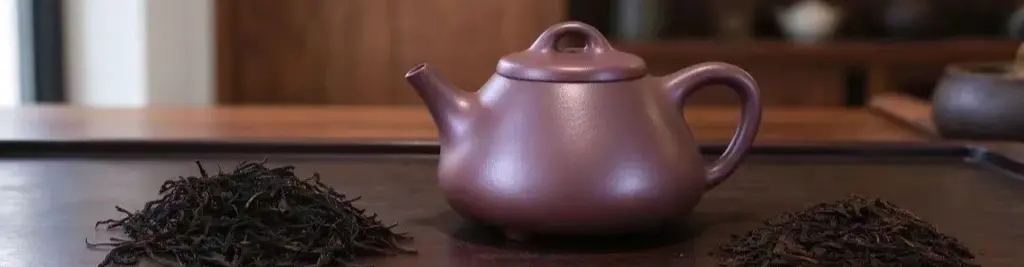
When you first receive a new Yixing Zisha Teapot, you may notice scattered tiny black dots across the clay surface. Many new buyers worry these spots are defects or dirt, but most of them are naturally occurring mineral inclusions inside genuine Zisha ore.
Zisha clay forms from weathered sedimentary rock mixed with iron, mica and other mineral particles. During high-temperature firing, iron particles oxidize and form small dark specks. These inclusions are widely viewed as a good sign that the clay has not been over-refined. Heavily processed clay is filtered repeatedly to remove all dark particles for a clean uniform look, which weakens the natural pore structure of the clay.
Still, not every black spot comes from natural minerals. If the marks are smudged, greasy, or wipe off easily with your finger, they may be kiln dust or residual carbon from firing. These are surface blemishes and will not affect long-term use. You can rinse them away with warm water before first use.
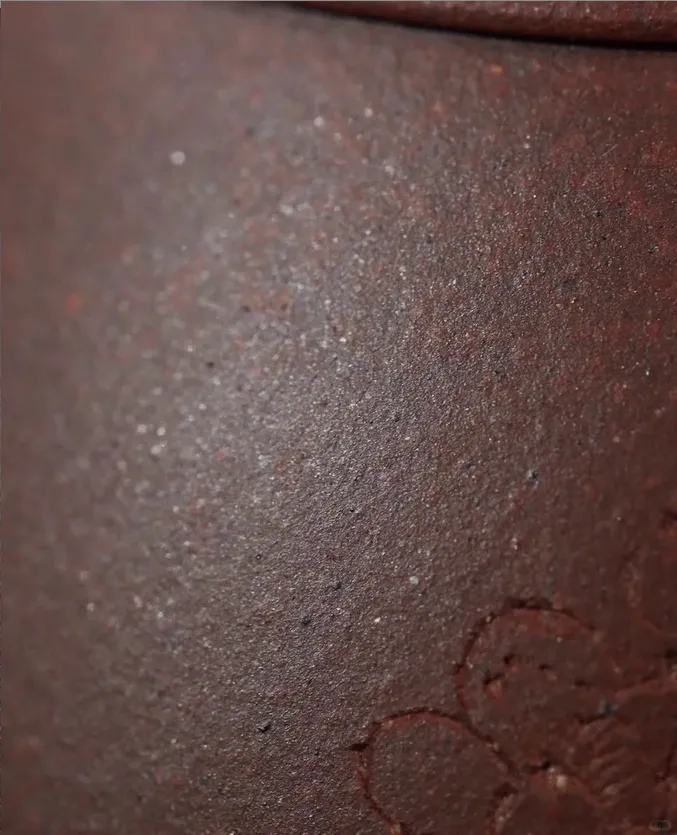
You should stay cautious about large clustered black patches. They sometimes appear in blended clay mixed with cheap additives. Authentic spots are random, small and embedded firmly into the clay body. As you brew tea over time, these natural marks will blend gently with the developing patina of your Chinese Clay Teapot.