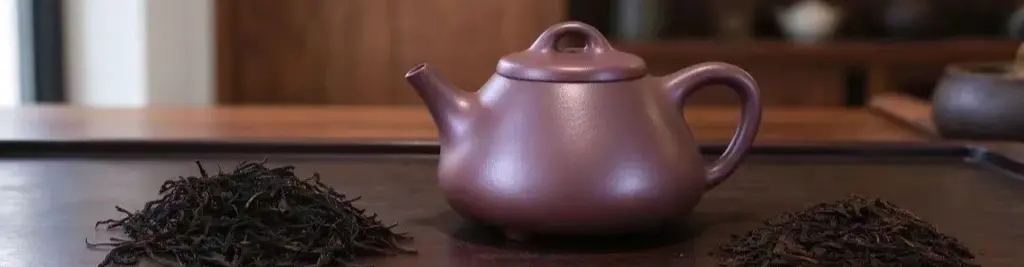
Many new tea owners get confused when water droplets appear on the outer wall of their Chinese Zisha Teapot. This phenomenon is often called “sweating”. Not all sweating is a bad thing, and you first need to tell apart natural clay breath from real leakage, which is a manufacturing flaw.
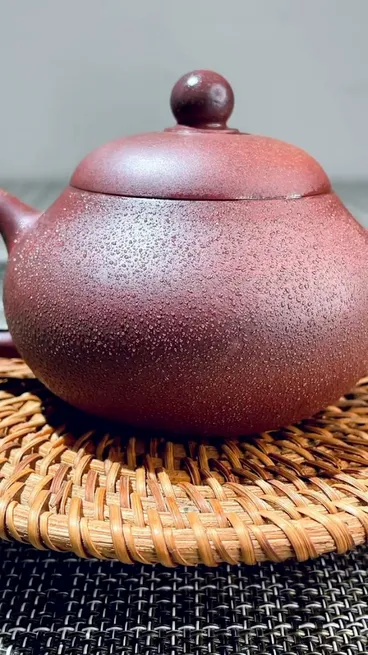
Genuine Zisha clay has fine, connected pores. When you pour hot water inside, the warm moisture slowly passes through the clay body and condenses on the cooler outer surface. This light, even mist of tiny droplets is the clay breathing. It usually happens with thin-walled pots and low-density ore, and it is a sign of active porous structure that many tea lovers like.
However, if you see streams of water running down the pot, or wet spots that only show up around the spout, lid seam or bottom joint, that is not breathing. It means there are tiny cracks or gaps where water seeps out. Poor clay mixing, uneven compression or firing errors can cause this kind of leaking.
There are simple ways to reduce heavy sweating if you do not like it. You can preheat the whole pot fully before adding tea leaves. When the pot temperature is close to the water temperature, less steam will condense outside. Using hotter, consistent brewing temperatures also helps. You do not need to worry about slight sweating, as it will not damage the pot or change your tea flavour.
Just remember: light, uniform dew is a feature of good porous clay, while running water is a defect worth checking before you keep using the teapot.